Leaves Falling Off: Diagnosis and Solutions
Your plant is dropping leaves? Follow our diagnostic tree: shock, watering, drafts, light, pests — with the right fix for each cause.
By SPRAIA editorial team · Method: botanical sources, field feedback and editorial validation
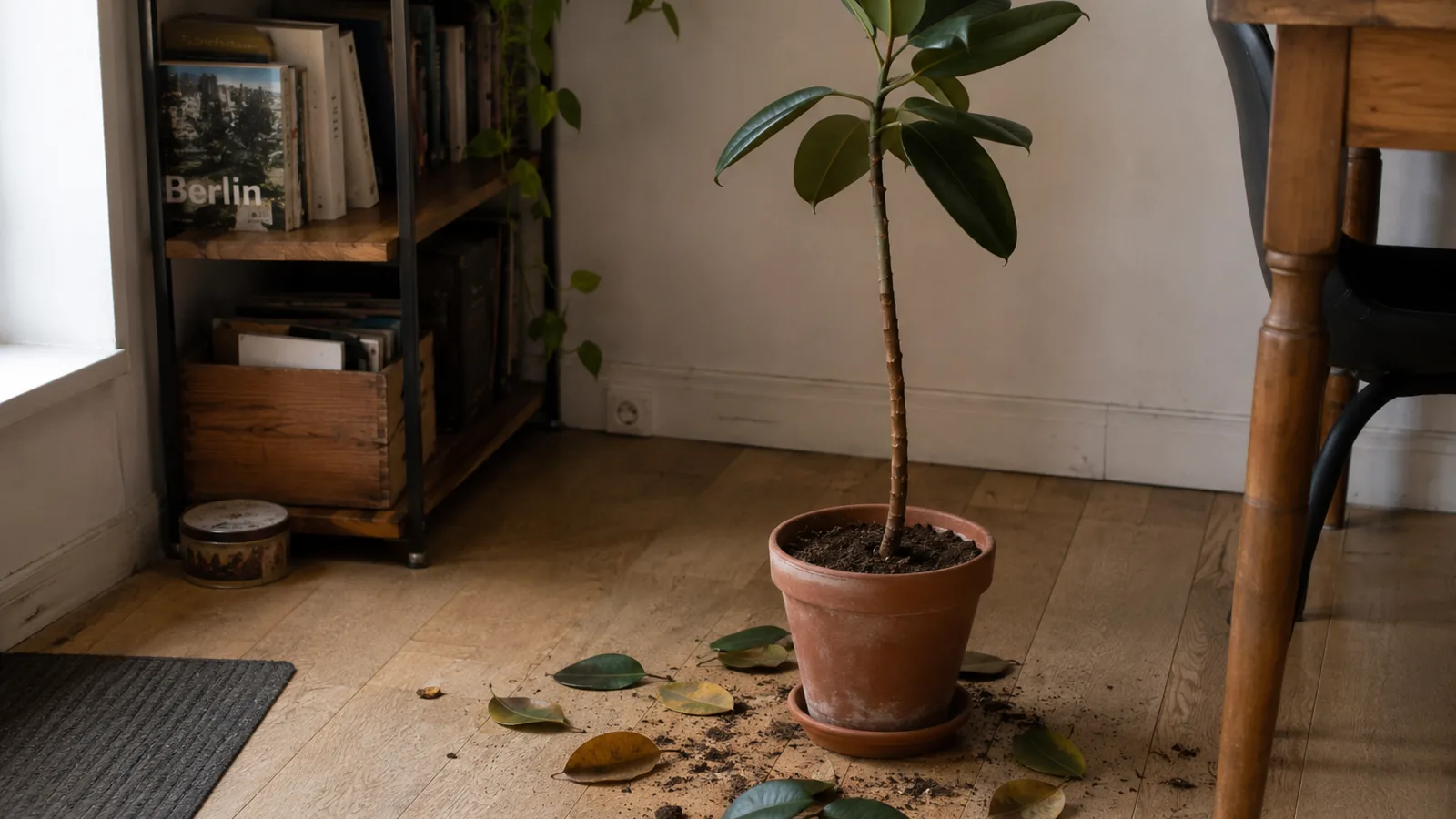
Seeing leaves scattered across the floor at the foot of your plant is one of the most alarming sights for a plant parent. But before you panic: leaf drop is a language, not a death sentence. A plant shedding its leaves is telling you something specific — you just need to learn to read the message.
This guide is a diagnostic tree: instead of listing causes at random, it teaches you to observe the right clues (which leaves fall, in what condition, in what context) so you can trace the exact cause. You’ll leave with a clear protocol and the right action to take, without treating your plant blindly.
Remember the most important principle up front: losing a few old bottom leaves is normal, but a sudden, massive drop is an alarm. Knowing the difference between the two will save you many sleepless nights.
Normal drop or alarming drop? The first sort
First, settle this fundamental question: is your plant doing routine housekeeping, or is it truly in distress?
Normal drop of the bottom leaves
Every plant renews its foliage. The oldest leaves — located at the bottom, near the substrate — eventually yellow and fall to redirect energy to new growth. This is physiological and harmless as long as:
- The drop involves 1 to 2 leaves now and then, always the lowest ones.
- The top of the plant stays vigorous, with healthy new leaves.
- The pace is slow and steady, without acceleration.
In this case: no worries. Cut the leaf cleanly at its base if it’s dangling and carry on with your routine.
Alarming drop
The warning sign is volume and speed. Use the table below to place your case in 30 seconds.
| What you observe | Verdict |
|---|---|
| 1-2 old bottom leaves, slowly | Normal (renewal) |
| Several leaves within a few days | Alarm (shock or watering) |
| Green leaves falling, still firm | Strong alarm (shock, cold) |
| Yellow, soft leaves before falling | Likely overwatering |
| Dry, brittle leaves before falling | Likely underwatering |
| Drop on the window or door side | Draft / cold |
A plant losing green, healthy leaves is more worrying than one shedding already-yellow leaves: it means it’s dumping functional foliage in an emergency, often triggered by a shock.
The diagnostic tree: 3 questions to ask
To identify the cause, don’t stare at the fallen leaf — look at the context. Ask yourself these three questions in order.
Question 1 — Which leaves are falling?
- Only the old bottom leaves → normal renewal, or chronic low light if it’s widespread.
- The young leaves at the top → serious, recent problem (shock, damaged roots, cold).
- Randomly all over → environmental shock or pests.
Question 2 — What condition are they in?
- Yellow and soft → points to overwatering / suffocating roots.
- Green and firm → points to thermal shock, drafts, recent move.
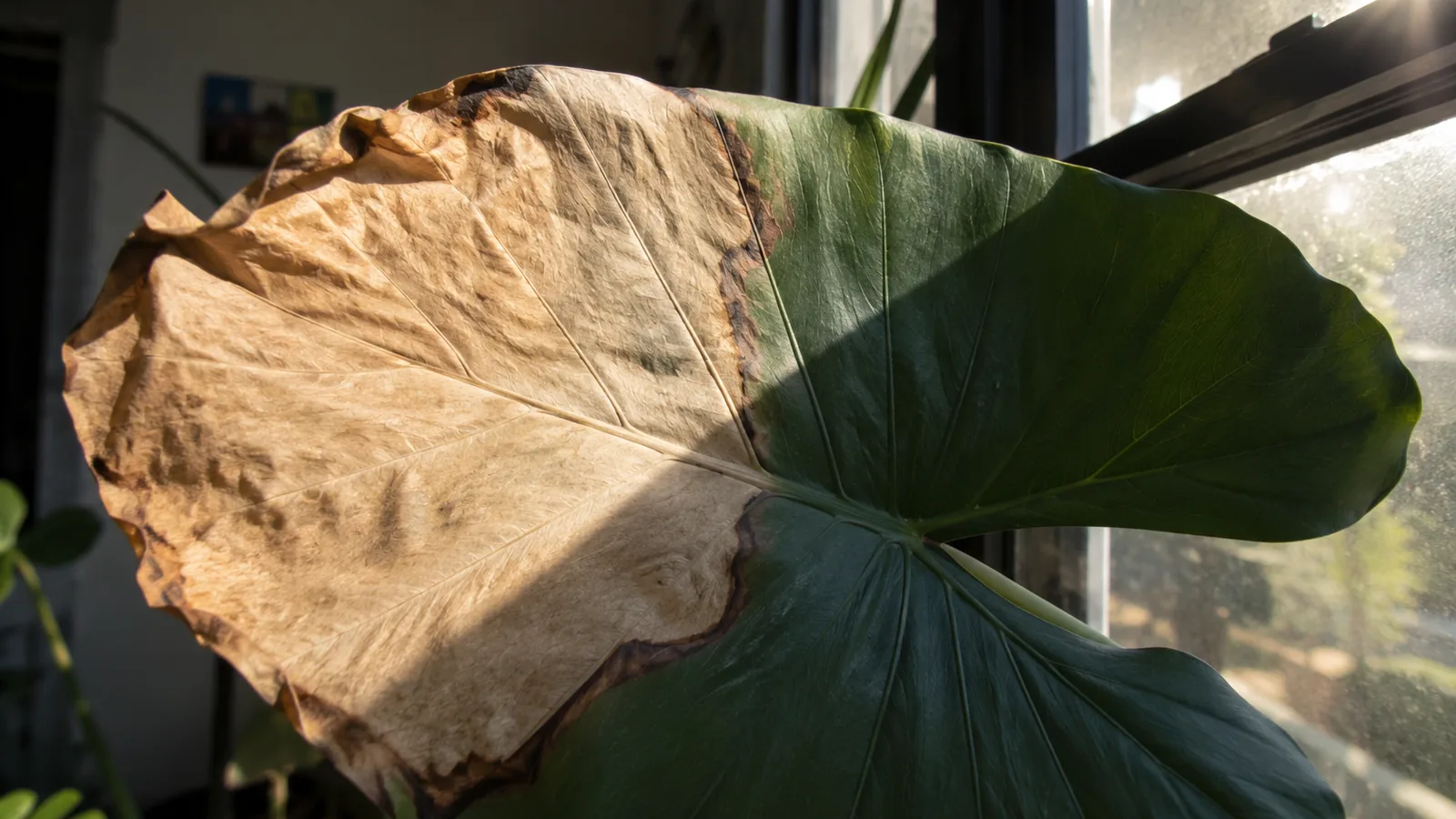
- Dry, brown, brittle → points to underwatering or overly dry air.
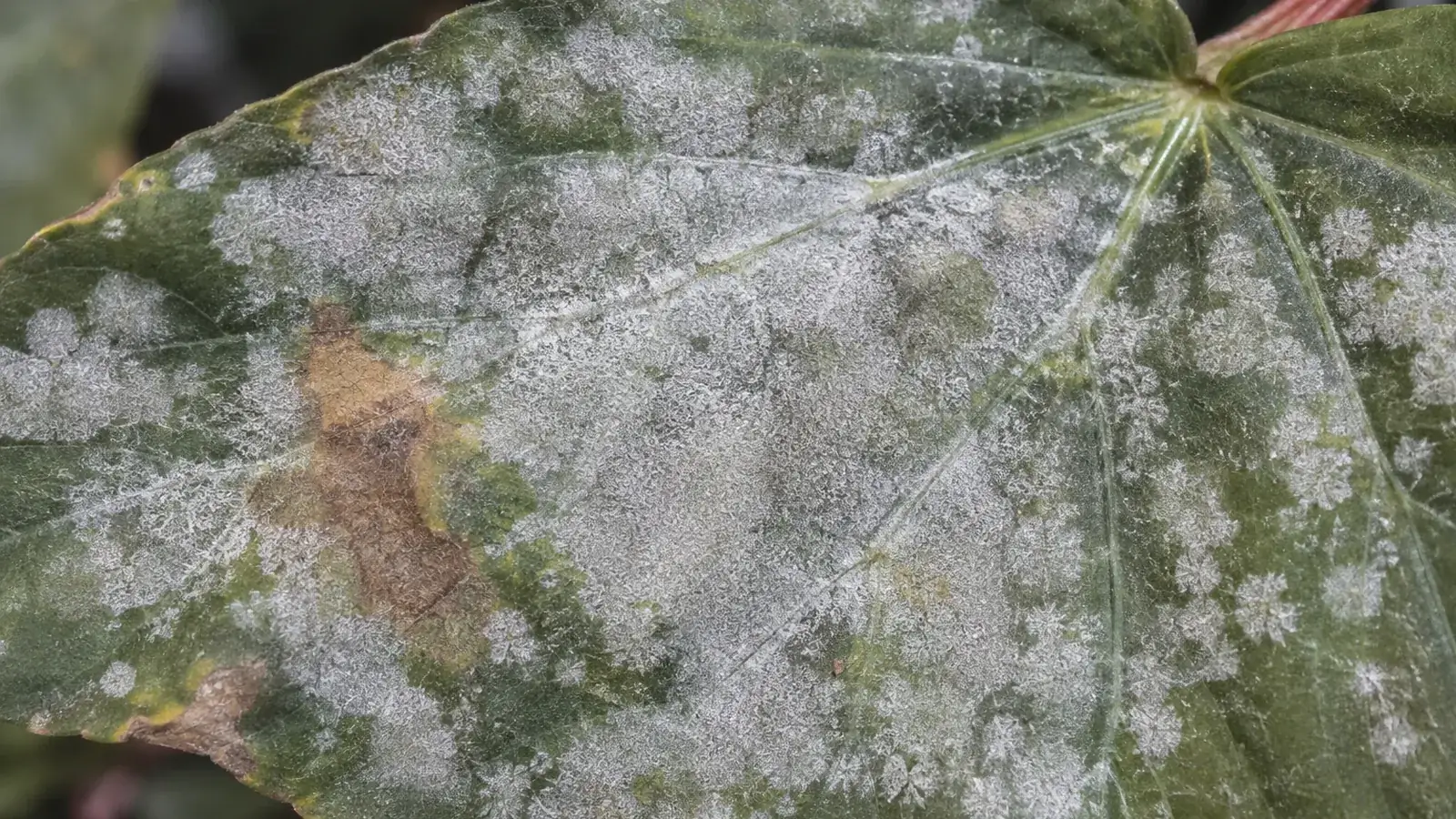
- Mottled, speckled, with webbing → points to pests.
Question 3 — What changed recently?
This is the most revealing question. A plant always reacts to a change, with a 1- to 3-week lag:
- Recent purchase or move → adjustment shock.
- Change of room or exposure → light shock.
- Transition into autumn/winter, heating switched on → dry air, cold, less light.
- Change in watering routine → irregular watering.
Cause #1: shock (moving, purchase, changing conditions)
This is by far the most common cause of sudden drop. A plant is an organism that acclimates slowly to its environment: light, humidity, temperature. Any abrupt change puts it into shock, and its typical response is to shed part of its foliage to reduce its needs while it adapts.
The risky situations
- Recent purchase: the plant leaves a production greenhouse (maximum light and humidity) for your living room. The drop often happens 1 to 3 weeks after purchase. This is the classic “transplant shock.”
- Moving house or changing rooms: even keeping the plant, changing its exposure changes everything.
- Aggressive repotting with damaged roots.
The solution: stability and patience
- Change nothing more for 3 to 4 weeks: same spot, same light.
- Don’t water more to “compensate”: shock is not a lack of water.
- No fertilizer on a stressed plant.
- Wait: as soon as the plant pushes out new leaves adapted to your light, the drop stops.
The Ficus elastica is the world champion of shock: it happily drops its leaves at the slightest move. Our Ficus elastica care guide explains how to acclimate it gently.
Cause #2: too much or too little water
Watering is the second big family of causes. Both extremes trigger a drop, but with opposite symptoms.
Overwatering (the most dangerous)
A constantly soggy substrate suffocates the roots, which rot and can no longer feed the plant. The paradoxical result: the plant “is thirsty” while sitting in water.
- Leaves turn yellow, become soft, then fall.
- Permanently wet soil, sometimes a musty smell.
- Spongy stem base.
If you suspect rot, act fast: our guide to saving an overwatered plant from root rot explains how to unpot, cut away the affected roots and repot into a healthy substrate.
Underwatering
Conversely, a parched plant sacrifices its leaves to survive.
- Dry, brittle, curled leaves before falling.
- Very dry soil, pulled away from the pot walls.
- An unusually light pot.
The fix: a soak (submerge the pot for 20 minutes) then resume regular watering.
Irregular watering: the silent trap
Between the two hides an insidious cause: irregularity. Alternating long droughts with excessive watering keeps the plant permanently stressed, and it drops leaves without you understanding why. The solution isn’t to water more or less, but more consistently. Our complete guide on when and how to water gives you the finger test and per-species frequencies to establish a reliable rhythm.
Cause #3: drafts, cold and heat
Tropical plants hate abrupt temperature swings and drafts. This is an often-overlooked cause because it’s invisible.
Cold and drafts
- A cold draft (a window cracked open at night, a front door, air conditioning) causes a rapid, localized drop on the exposed side.
- Below 12-15 °C, most tropicals suffer; some drop their leaves within days.
- The leaves often fall while still green, which betrays a shock rather than a slow disease.
Dry heat
At the opposite end, a plant sitting right above a radiator or in the flow of a heating vent suffers abrupt drying: brown edges, then drop.
The solution
- Move the plant away from doors, windows, AC vents and radiators.
- Aim for a stable temperature between 18 and 24 °C for most houseplants.
- In winter, beware of leaves touching a cold windowpane.
Cause #4: lack of light
A plant starved of light can no longer photosynthesize enough to feed all its foliage. It then performs an economic pruning: it abandons the bottom and inner leaves first, the least exposed ones.
The symptoms
- Progressive drop of the lower leaves, over several weeks.
- Stems that stretch toward the window (etiolation), with widening gaps between leaves.
- Smaller, paler new leaves.
- A clear worsening in autumn-winter, when light drops.
The solution
- Move the plant closer to a window (1 to 2 m from an east- or west-facing one).
- If exposure stays low, add an LED grow light (12 hrs/day).
- Match the right plant to the right room: some tolerate low light far better than others.
To accurately assess each room’s light and know where to place your plants, see our complete guide to indoor light. SPRAIA’s built-in light meter gives you an objective reading in one tap.
Cause #5: pests
Finally, sap-sucking pests (mealybugs, spider mites, thrips) weaken the plant and can trigger a drop when the infestation is advanced.
How to spot them
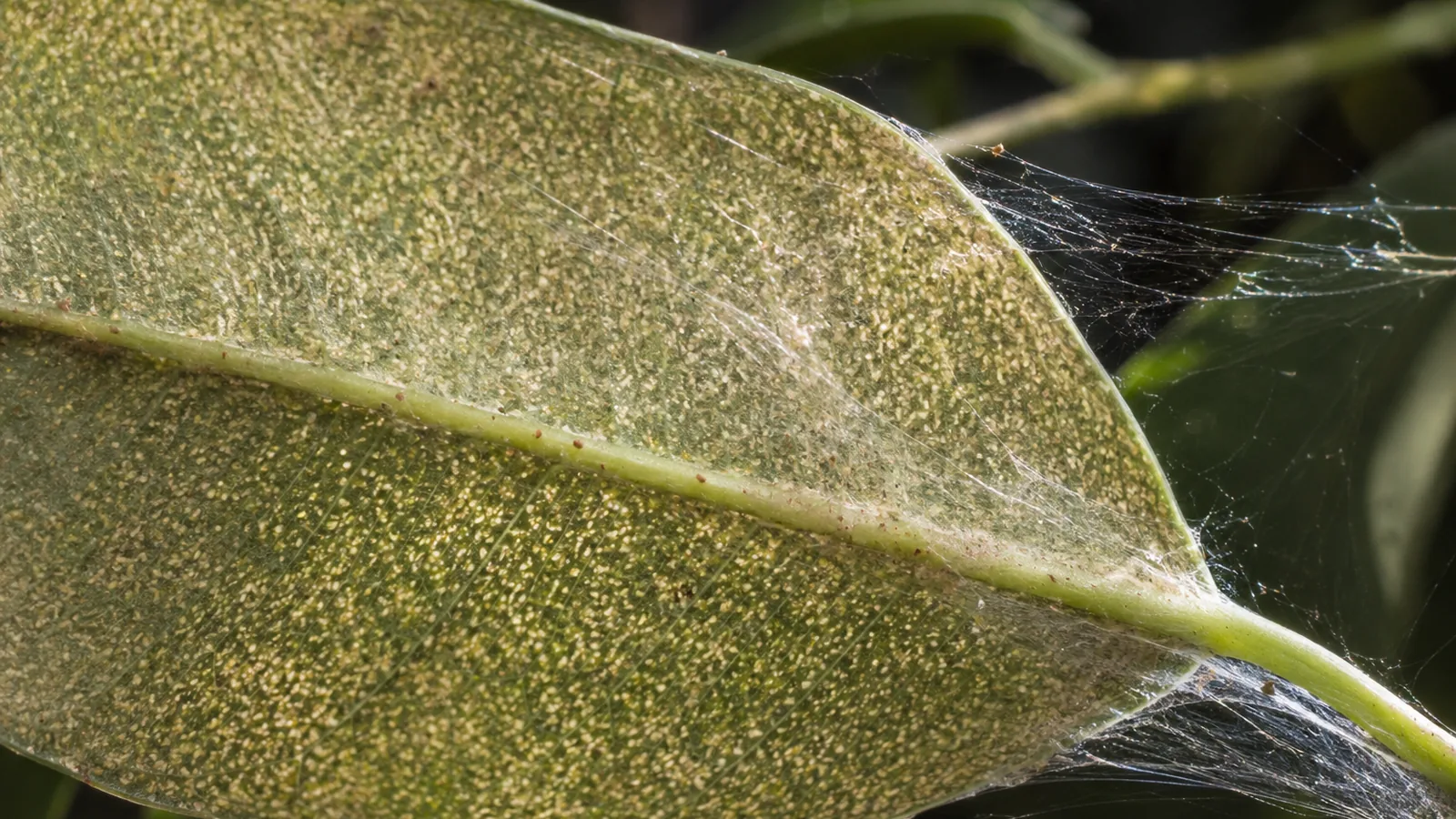
- Mottled leaves, speckled with yellow or silver.
- Fine webbing under the leaves (spider mites).
- Cottony white clusters, sticky honeydew (mealybugs).
- The drop comes with a dull, tacky overall appearance.
The solution
- Isolate the plant from the others immediately.
- Shower the foliage with lukewarm water to dislodge the pests.
- Spray insecticidal soap (5 ml/L) or Neem oil, repeating 3 times at 5-day intervals to break the reproduction cycle.
- Inspect the underside of the leaves weekly until they’re gone.
Summary table: cause and action
| Cause | Key clue | Immediate action |
|---|---|---|
| Shock (purchase, move) | Drop 1-3 wks after a change | Stabilize, change nothing, be patient |
| Overwatering | Soft leaves + soggy soil | Stop watering, check the roots |
| Underwatering | Dry leaves + soil pulled away | Soak for 20 min |
| Cold / draft | Green leaves dropping on one side | Move away from cold, stabilize temperature |
| Lack of light | Etiolation + bottom leaves | Move closer to window, LED light |
| Pests | Mottling, webbing, white clusters | Isolate, shower, treat 3× |
Tracking recovery: the key to a good diagnosis
The classic trap is to change several things at once: move the plant, water it more, add fertilizer. The result: it’s impossible to know what helped or made things worse.
The winning method is the opposite: change one variable at a time, then observe for 2 to 3 weeks. Note the date, the number of leaves lost, the state of the new growth. This is exactly what SPRAIA’s growth journal lets you do: by photographing your plant regularly, you can see whether the drop is slowing or whether healthy new leaves are appearing — the sign that your fix is working.
Remember: a healthy new leaf emerging is the best signal that the plant has regained confidence. From there, the drop stops on its own.
Frequently asked questions — Leaves falling off
The most common questions about leaf drop on houseplants.
- No, it's the most classic adjustment shock. The plant leaves a production greenhouse and has to get used to your light and your drier air. Change nothing for 3 to 4 weeks, don't water more, and wait: as soon as it pushes out new leaves adapted to your home, the drop stops.
- Look at which leaves fall and at what pace. If it's 1 to 2 old bottom leaves, slowly, while the top stays vigorous with new growth, it's normal renewal. A massive, rapid drop, or a drop of green, firm leaves, is on the other hand an alarm.
- Losing green, firm leaves signals an abrupt shock: a cold draft, a temperature drop, a recent move or damaged roots. The plant is dumping functional foliage in an emergency. Look for what changed recently in its environment and stabilize its conditions.
- Definitely not as a reflex. In half of cases, the drop is due to overwatering or shock, not a shortage. First touch the substrate 3-4 cm deep: if it's damp, don't water. An extra watering on already-drowned roots speeds up rot.
- No, a fallen leaf never grows back exactly where it was. The plant produces new leaves at the top and at its growth points. The goal isn't to recover lost leaves, but to stop the cause so the new growth is healthy and full.
Conclusion: observe before you act
Leaf drop is never an unsolvable mystery: it’s a logical reaction to a specific context. By asking yourself the three right questions — which leaves, in what condition, what changed — you can trace the cause in the vast majority of cases, and apply the one action that matters instead of piling on contradictory gestures.
Keep the mindset of a seasoned plant parent: one variable changed at a time, then patience. And if you’re unsure, the SPRAIA app has your back — photo diagnosis, regular watering reminders and a growth journal to track recovery leaf by leaf. Your plants are only waiting to bounce back.